Expert Chimney Repairs You Can Trust
Exterior Masonry Chimney Repair Facts
Not all chimney professionals have easy access to chimneys for routine maintenance. Many chimneys provide inadequate access, often relying solely on a ladder for inspections. In most cases, workers must set up a scaffolding system to properly maintain or inspect the chimney. Furthermore, crews must erect scaffolding on-site to comply with safety regulations set by the Occupational Safety and Health Administration (OSHA). Setting up scaffolding typically requires several hours of work.
Most chimney companies either hire scaffolding professionals or have a crew of two to four skilled workers who set it up. This need for scaffolding can significantly increase the cost of maintaining a chimney, especially for those located on the side of a home or taller ones situated in the center of the house. These chimneys, in particular, pose a challenge for workers to reach with a ladder for routine maintenance. Skilled personnel must safely install scaffolding to ensure the system is securely in place around the chimney.
If the crew does not set up the scaffolding correctly, they pose a risk not only to themselves but also to the home, the homeowner, and anyone nearby. Therefore, it is crucial to have a competent person in charge of setting up this large structure.
Here are some photos of what a scaffolding system looks like when performing routine maintenance on a chimney with difficult access.
The majority of masonry materials possess a significant degree of porosity, allowing them to absorb substantial quantities of water. Standard bricks function similarly to sponges, taking in moisture and subsequently transferring this humidity to the interior of the chimney. These conditions promote the growth of moss, algae, and organic matter. Moss growth on a masonry chimney is a significant indicator of moisture presence, which is likely to have infiltrated the brick and mortar. If you do not address this issue, it may lead to considerable deterioration of the chimney structure, resulting in cracks, spalling, and potential structural instability.
Furthermore, moss retains moisture, which can exacerbate problems such as damage to chimney liners and the proliferation of mold.
Moss thrives in damp, shaded conditions, suggesting that the masonry materials trap water. This persistent moisture undermines the integrity of the bricks and mortar over time, leading to the formation of cracks and spalling, where fragments of material break away, thereby compromising the structural integrity.
The capacity of moss to absorb and retain water can lead to freeze-thaw cycles that further exacerbate damage to the chimney.
A compromised chimney liner poses a serious safety hazard, including the risk of carbon monoxide leaks and potential fires.
Additionally, moss growth may facilitate mold development, posing health risks and detracting from the aesthetic appeal of the chimney with unsightly stains.
In summary, the presence of moss on a chimney clearly indicates underlying moisture issues that can lead to significant structural concerns. It is essential to address these moisture issues and remove the moss properly to maintain the integrity and safety of the chimney.
Here are some before-and-after photos of chimneys with significant moss, algae, and organic growth that our crew repaired to prevent potential water intrusion hazards in the future.
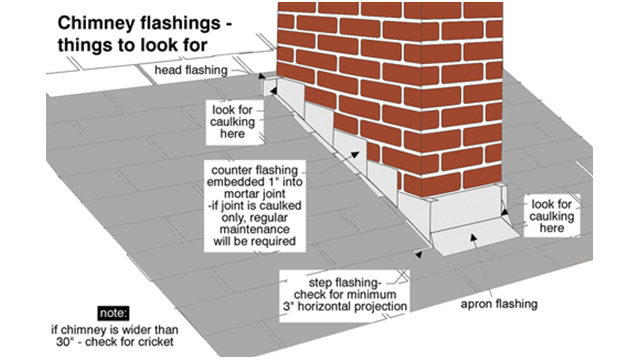
The chimney flashing is the metal that extends out from the mortar joints of the chimney near the roof. This flashing protects the intersection between the roof and the chimney. When performing the masonry chimney flashing repairs, the correct way to install flashing is into the mortar joints to prevent water intrusion into the home. If the contractor fails to install the chimney flashing correctly, they may cause water intrusion problems. A few signs that your chimney flashing may be leaking include water stains on the ceiling and walls surrounding the chimney. Additionally, some hidden issues associated with leaking chimney flashing include dry rot and the growth of black mold within the home's walls.
Most roof and chimney companies prefer to cut into the masonry to install the chimney flashing, thereby reducing labor costs. When the installer cuts the chimney flashing into the masonry, they usually seal the joints with caulking. The sealant will eventually create a potential water intrusion issue. The masonry will expand and contract at different rates due to weather conditions and temperatures. When this happens, the caulking used to seal the chimney flashing will start to peel off the masonry structure. When this happens, it creates a funnel for water to flow behind the chimney flashing and into the home.
Additionally, this type of installation will require constant inspection and maintenance, typically every few months. Therefore, if the workers do not install the chimney flashing in the mortar joints, they do not perform the chimney flashing repair correctly. Ensure your chimney flashing repair mirrors the example below to achieve optimal water protection.
The process of repairing a mortar joint in a brick chimney is called “tuckpointing.” The term originates from the process of tucking mortar into a damaged mortar joint using a pointed trowel, commonly referred to as a “pointing trowel.” Tuckpointing is a critical maintenance task and keeps water from entering the brick wall cavity. If water is allowed to seep past the mortar and into the wall, brick failure may occur, such as cracking or spalling (the brick face falls off). Failure to fix cracks in your joints can lead to very costly repairs, the longer it is left unfixed.
The chimney crown wash is the top concrete element of a masonry chimney. It also covers and seals the top of the chimney from the flue liners to the chimney edge. The crown should be a sloped covering for the top of a masonry chimney, designed to shed water away from the flue liner and the chimney, and to allow for the expansion and movement of the flue liner. A proper chimney crown offers the advantage of extension beyond the sides of the chimney, a minimum of 2 1/2″ to direct water away from both the flue and the chimney. A properly sealed space between the liner and the crown, allowing for vertical movement of the flue, should be a design feature of prefabricated or site-constructed masonry or metal crowns.
Most masonry materials are porous and will absorb large amounts of water. Standard brick is like a sponge, absorbing water and wicking moisture to the chimney interior. Defective mortar joints or the use of improper mortar or brick can significantly increase the likelihood of water soaking and penetrating the interior of the masonry chimney structure.
Several products have been developed specifically for use as waterproofing agents on masonry chimneys. These formulas are vapor-permeable, meaning they allow the chimney to breathe out but not in. Thus, water that has penetrated the chimney, or moisture that has originated from inside, is allowed to escape, while the waterproofing agent prevents water from entering from the outside.
Water damage to masonry chimneys typically occurs over a slow, subtle process. The problem is often not evident until it has become quite serious.
Although these water prevention measures may initially cost a few dollars, they will save you the significant expense of extensive masonry repairs or rebuilding the entire chimney in the near future, and as such, represent a wise investment in your home.
Adams Chimney Specialist LLC uses ChimneySaver Water Repellent with a moss and algae stain blocker, the #1 water repellent for your chimney and masonry. ChimneySaver Water Repellents come with a 7-year Warranty and have been shown to reduce water penetration into masonry by 99.9% according to ASTM tests conducted at the University of Wyoming.
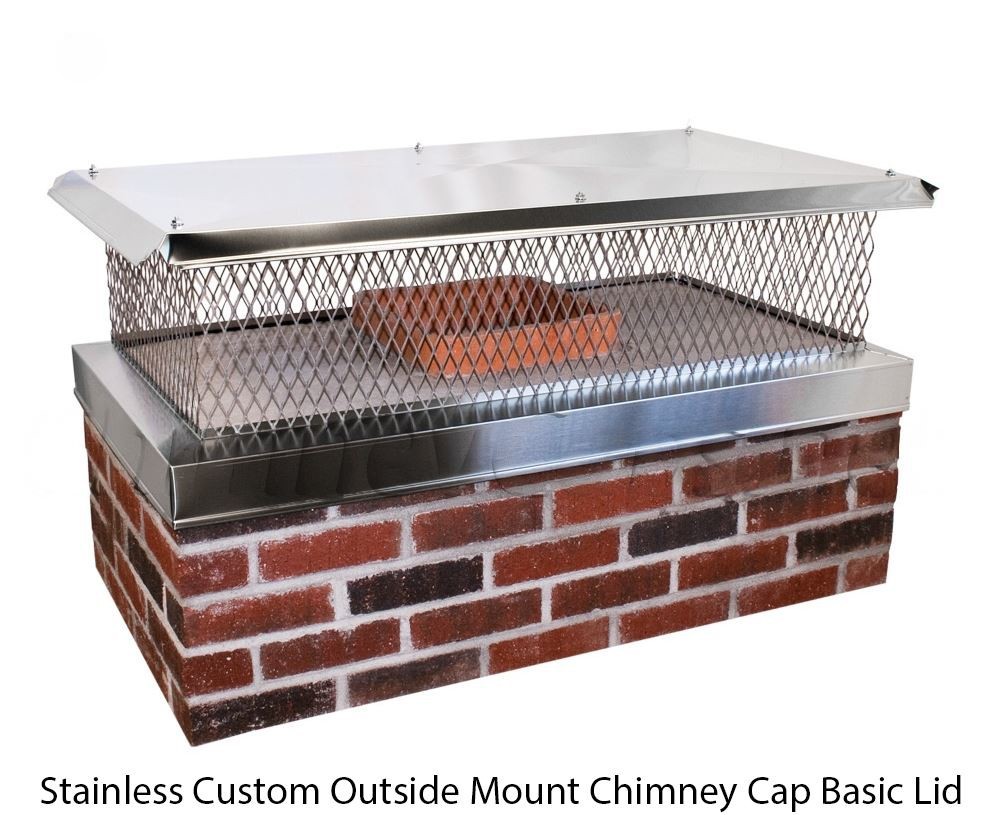
The top metal part that covers the masonry chimney structure is known as the chimney cap or spark arrestor. A chimney cap primarily protects the chimney from the intrusion of animals, debris, and water. The spark arrestor mainly captures the burning embers released from the chimney during use, thereby preventing surrounding combustibles from igniting. Additionally, the cap should cover the chimney crown wash, the chimney flue system, and the masonry chimney structure. Therefore, if someone installs a custom chimney cap or spark arrestor, it will protect all or most of the masonry structure from water intrusion.
There are many different types of chimney cap materials, sizes, and styles on the market today. One common mistake when installing a chimney cap is selecting the incorrect size or type of chimney cap needed for the chimney. This issue poses a potential fire and water hazard, which can be a deadly mistake for your family and home. The best resolution is to have a custom stainless steel chimney cap installed to protect your family and home.
Interior Masonry Chimney Repair Facts
A chimney damper is a metal plate that can be positioned to close off the chimney when not in use. Because the damper prevents outside air from entering the interior space, specifically. Additionally, a damper can be opened to permit hot gases to exhaust during a fire. Furthermore, a damper also stops heat from escaping up your chimney when the fireplace is not in use. If your fireplace does not have a damper or a tight-fitting set of glass doors, you will obviously be pumping money up your chimney. Currently, the two top damper designs on the market are the Lyemance (pivoting door) and the Lock Top (translating door).
A throat damper is a metal plate at the base of the chimney. This damper is located just above the firebox. Also, it can be opened and closed by a lever, gear, or chain to seal off the fireplace from the chimney. Additionally, because the throat damper is subjected to intense heat from the fire directly below. Therefore, it is common for the metal to become warped eventually over time. Thus, it further degrades the ability of the throat damper to seal significantly. However, the advantage of a throat damper is that it seals off the living space from the air mass in the chimney. Which, especially for chimneys positioned on the outside of the home’s wall, is generally very cold. Therefore, it is possible in practice to use both a top damper and a throat damper to obtain the benefits of both.
A top damper, also known as a cap damper, is a metal spring door placed at the top of the chimney. Additionally, the damper features a long metal chain that allows for opening and closing the damper from the fireplace. The advantage of a top damper is the tight weatherproof seal that it provides when closed. Therefore, it prevents cold outside air from flowing down the chimney and into the living space. Subsequently, a feature that can rarely be matched by the metal-on-metal seal afforded by a throat damper.
Cleaning And Maintenance
Masonry Cleaning Products
Masonry Maintenance Information
Adams Chimney Specialist LLC provides the best masonry chimney repair and sweeps in the area.
Call today for a quote on chimney sweep and repairs or click the link below to book an appointment now.
This website uses cookies.