Identifying Masonry Cracks
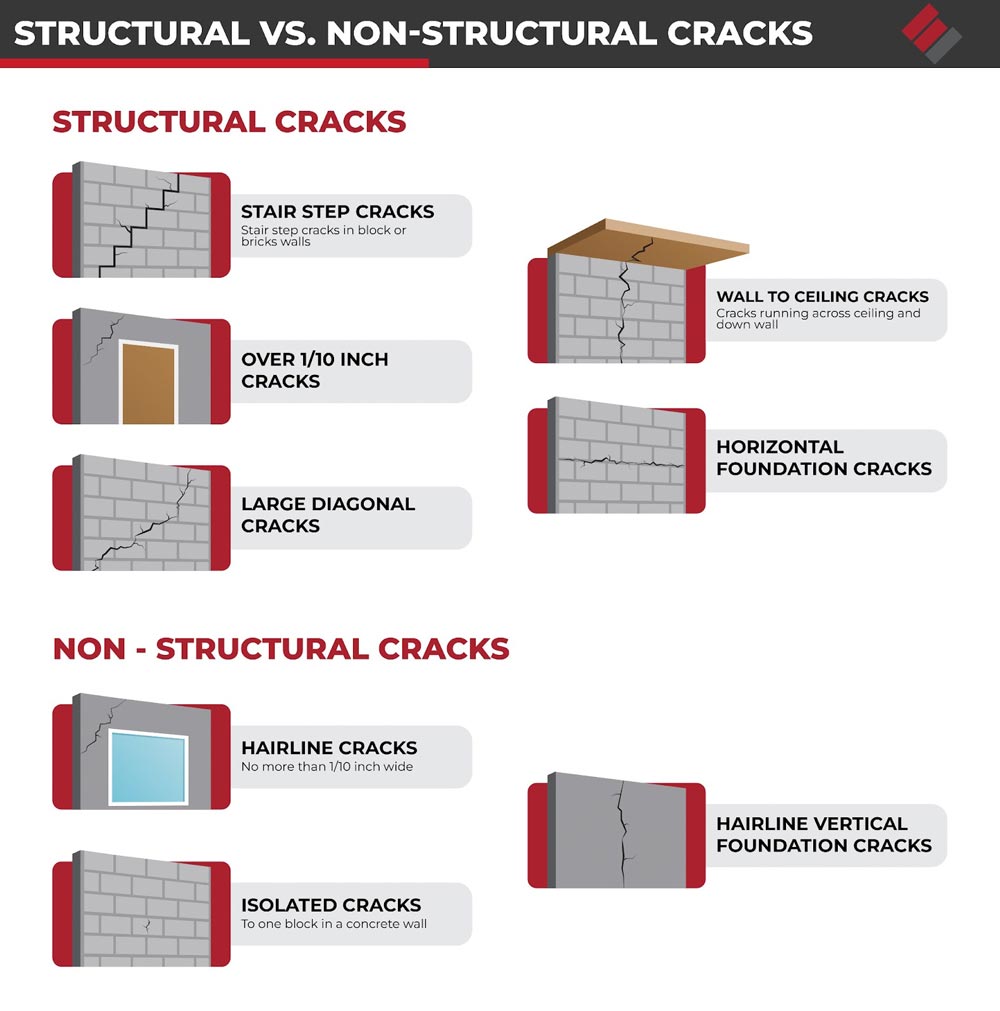
When it comes to masonry cracks in a brick house, professional evaluation is crucial. Be especially vigilant for horizontal crack patterns, stair-step cracks wider than 1/8 inch, or any vertical crack that is expanding. While small or hairline cracks can often be merely cosmetic, resulting from temperature fluctuations or seasonal adjustments, any cracks exceeding 1/8 inch or showing signs of recent growth indicate a potential foundation problem that requires immediate action. Don’t overlook these warning signs; addressing them promptly can save you from more significant issues down the line.
It’s essential to recognize that brick cracks are never truly normal; they often indicate significant underlying foundation issues that require professional attention. While minor cracks may result from weather fluctuations or normal building settlement, more serious cracks can signal structural problems that threaten your home’s stability.
Distinguishing between harmless cosmetic cracks and critical structural warnings is crucial for ensuring your home’s safety. Let’s delve into the various types of cracks, what they signify, and the appropriate actions to take when you encounter them.
Not all cracks are created equal. The pattern, location, and size of cracks in your brick wall reveal crucial insights about what’s occurring beneath the surface. Understanding these details is key to effectively addressing any underlying issues.
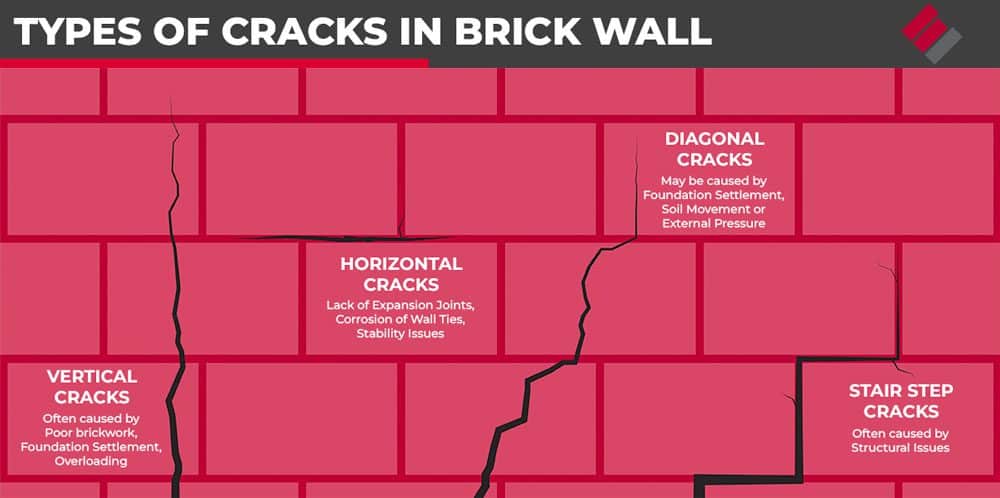
Vertical crack patterns typically run straight up and down the length of your brick wall. These often develop from thermal expansion as bricks absorb and release moisture throughout seasonal changes. When temperatures fluctuate, bricks expand and contract, sometimes creating small crack lines.
Most vertical crack patterns start as minor cracks that don’t threaten your home’s structure. However, they deserve attention when they:
Even hairline crack patterns that seem harmless can indicate foundation settling or movement if they persist over time.
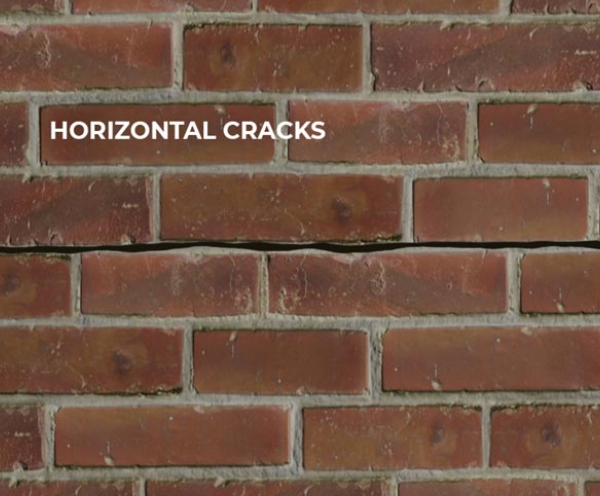
Horizontal crack patterns represent the most serious type of brick wall damage. These cracks typically indicate significant foundation problems, particularly from hydrostatic pressure or major foundation damage.
When soil moisture builds up around your concrete foundation without proper drainage, it can exert pressure on the foundation walls. This pressure can cause horizontal brick cracks that often accompany wall bowing or inward movement.
Horizontal brick patterns differ from horizontal brick cracks in essential ways. Natural brick patterns are intentional design elements, while horizontal brick cracks signal structural damage that requires immediate foundation repair.
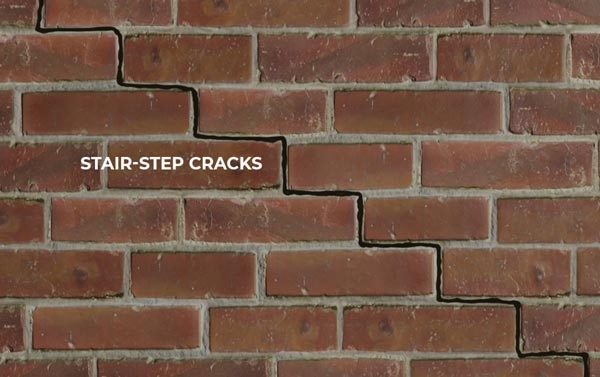
Stair-step cracks follow the mortar joint lines in a distinctive zigzag pattern that resembles stairs. These cracks almost always indicate differential settlement, where your foundation settles unevenly into the ground.
Differential settlement creates stress throughout your foundation and the brick veneer above it. As one section of your foundation moves differently from another, the brick wall reflects this movement through stair-step crack patterns.
Diagonal crack lines can indicate various types of foundation movement or structural damage. In an older home, these might develop as the structure naturally shifts over time. However, diagonal crack patterns, combined with other symptoms, often indicate ongoing foundation problems.
The key difference lies in how brick veneer cracks versus structural brick damage appears. Brick veneer cracks typically affect only the outer layer, while structural damage impacts the load-bearing elements of your wall.
Understanding why cracks develop helps you identify potential solutions and prevent further damage to your property.
Foundation settlement occurs when your concrete foundation sinks unevenly into the soil. Several factors contribute to this foundation problem:
A structural engineer can assess whether foundation movement falls within normal ranges or indicates severe foundation damage. These professionals understand how crawl space conditions, soil types, and construction methods interact to create various foundation problems.
Your home’s environment plays a significant role in the stability of brick walls and the health of the foundation.
Older home construction often used techniques and materials that modern building standards do not require. Brick homes built decades ago might have:
These factors don’t automatically create problems, but they can make an older home more susceptible to foundation issues over time.
Sometimes, brick cracks result from original construction issues rather than later foundation problems:
Certain crack characteristics indicate serious structural problems that need prompt evaluation and potential foundation repair.
Watch for these warning signs that indicate potential structural issues:
Adams Chimney Specialist LLC provides exceptional masonry crack repair services in your area. Don’t delay—contact us now to schedule your expert masonry repair appointment. Click the “Book Masonry Repair Estimate Appointment” link to secure your spot online and discover why we’re the top choice in the industry!
This website uses cookies.