 Skip to content



Identifying Masonry Cracks
When it comes to masonry cracks in a brick house, professional evaluation is crucial. Be especially vigilant for horizontal crack patterns, stair-step cracks wider than 1/8 inch, or any vertical crack that is expanding. While small or hairline cracks can often be merely cosmetic, resulting from temperature fluctuations or seasonal adjustments, any cracks exceeding 1/8 inch or showing signs of recent growth indicate a potential foundation problem that requires immediate action. Don’t overlook these warning signs; addressing them promptly can save you from more significant issues down the line.
When Should You Be Worried About Cracks in Bricks
It's essential to recognize that brick cracks are never truly normal; they often indicate significant underlying foundation issues that require professional attention. While minor cracks may result from weather fluctuations or normal building settlement, more serious cracks can signal structural problems that threaten your home's stability.
Distinguishing between harmless cosmetic cracks and critical structural warnings is crucial for ensuring your home's safety. Let's delve into the various types of cracks, what they signify, and the appropriate actions to take when you encounter them.
Understanding Different Types of Cracks and What They Mean
Not all cracks are created equal. The pattern, location, and size of cracks in your brick wall reveal crucial insights about what's occurring beneath the surface. Understanding these details is key to effectively addressing any underlying issues.
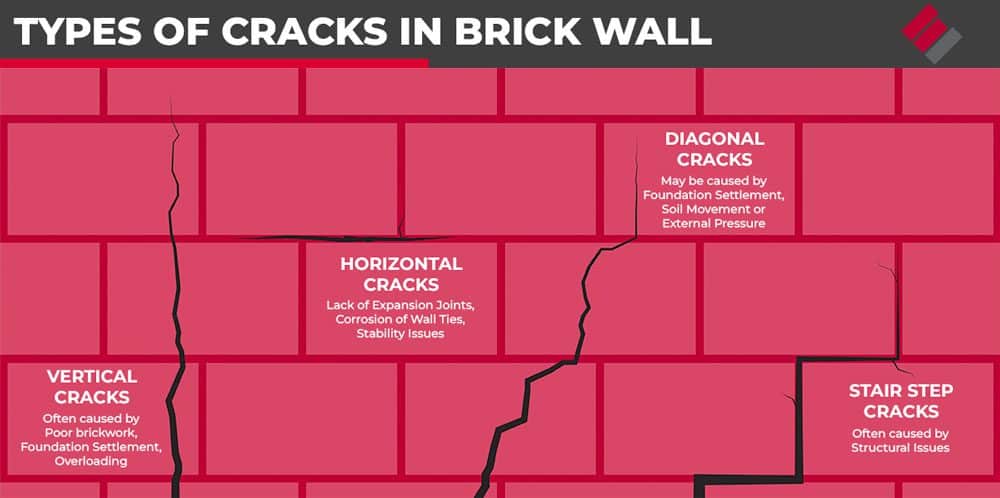
Vertical Cracks: Common But Worth Monitoring
Vertical crack patterns typically run straight up and down the length of your brick wall. These often develop from thermal expansion as bricks absorb and release moisture throughout seasonal changes. When temperatures fluctuate, bricks expand and contract, sometimes creating small crack lines.
Most vertical crack patterns start as minor cracks that don't threaten your home's structure. However, they deserve attention when they:
- Grow wider than 1/8 inch
- Show recent expansion or lengthening
- Appear alongside other foundation issues
Even hairline crack patterns that seem harmless can indicate foundation settling or movement if they persist over time.

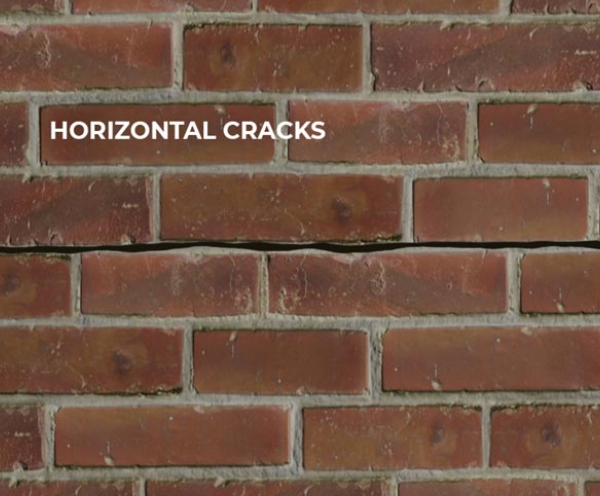
Horizontal Brick Cracks: Red Flags for Foundation Problems
Horizontal crack patterns represent the most serious type of brick wall damage. These cracks typically indicate significant foundation problems, particularly from hydrostatic pressure or major foundation damage.
When soil moisture builds up around your concrete foundation without proper drainage, it can exert pressure on the foundation walls. This pressure can cause horizontal brick cracks that often accompany wall bowing or inward movement.
Horizontal brick patterns differ from horizontal brick cracks in essential ways. Natural brick patterns are intentional design elements, while horizontal brick cracks signal structural damage that requires immediate foundation repair.
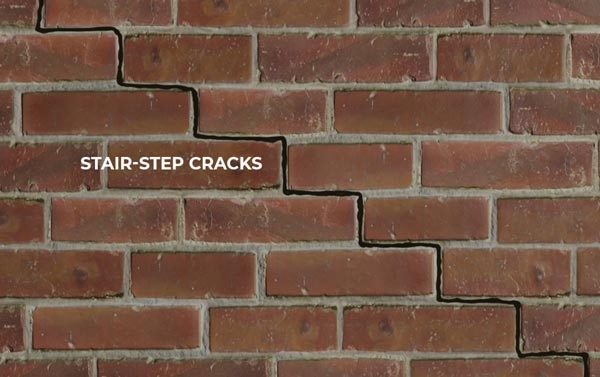
Stair Step Cracks: Classic Signs of Foundation Settlement
Stair-step cracks follow the mortar joint lines in a distinctive zigzag pattern that resembles stairs. These cracks almost always indicate differential settlement, where your foundation settles unevenly into the ground.
Differential settlement creates stress throughout your foundation and the brick veneer above it. As one section of your foundation moves differently from another, the brick wall reflects this movement through stair-step crack patterns.
Diagonal Crack Patterns: Understanding Structural Movement
Diagonal crack lines can indicate various types of foundation movement or structural damage. In an older home, these might develop as the structure naturally shifts over time. However, diagonal crack patterns, combined with other symptoms, often indicate ongoing foundation problems.
The key difference lies in how brick veneer cracks versus structural brick damage appears. Brick veneer cracks typically affect only the outer layer, while structural damage impacts the load-bearing elements of your wall.

The Root Causes Behind Brick and Masonry Cracks
Understanding why cracks develop helps you identify potential solutions and prevent further damage to your property.
Foundation Settlement and Structural Issues
Foundation settlement occurs when your concrete foundation sinks unevenly into the soil. Several factors contribute to this foundation problem:
- Soil conditions: Expansive clay soils expand when wet and shrink when dry, creating unstable conditions for your foundation. Poor soil drainage compounds these issues by allowing water to accumulate around foundation walls.
- Foundation settling versus foundation settlement: Foundation settling refers to regular, minor movement as a new structure adjusts. Foundation settlement indicates problematic movement that creates structural issues requiring professional intervention.
A structural engineer can assess whether foundation movement falls within normal ranges or indicates severe foundation damage. These professionals understand how crawl space conditions, soil types, and construction methods interact to create various foundation problems.

Environmental Factors: Soil, Water, and Weather Impact
Your home's environment plays a significant role in the stability of brick walls and the health of the foundation.
- Water and drainage: Poor drainage allows water to accumulate near your foundation, creating hydrostatic pressure that can crack foundation walls and damage brick veneer above. This moisture also affects crawl space conditions, potentially causing additional structural problems.
- Tree roots: Large trees growing too close to your foundation can cause several issues. Tree roots absorb moisture from the soil, causing uneven drying and foundation movement. Additionally, growing roots can physically push against foundation walls, exerting pressure that can lead to cracks.
- Weather conditions and seasonal changes: Temperature fluctuations cause thermal expansion in brick and mortar materials. While this natural process usually creates only minor cracks, repeated expansion and contraction can worsen existing foundation issues.
Age-Related Factors in Brick Homes
Older home construction often used techniques and materials that modern building standards do not require. Brick homes built decades ago might have:
- Different mortar mix formulations that age differently
- Fewer or inadequate expansion joints
- Crawl space designs that don't manage moisture effectively
- Foundation systems are less resistant to soil movement
These factors don't automatically create problems, but they can make an older home more susceptible to foundation issues over time.
Construction and Design Considerations
Sometimes, brick cracks result from original construction issues rather than later foundation problems:
- Mortar joint quality: Poor mortar mix or improper installation creates weak points where cracks commonly develop. Quality mortar joints should last decades without significant deterioration.
- Brick veneer installation: Improperly installed brick veneer may not accommodate natural building movement, leading to premature cracking. Adequate expansion joints and proper anchoring systems help prevent these issues.
- Exterior wall design: The connection between your brick veneer and the underlying structure affects long-term performance. Poor design or installation can create stress points that develop into cracks over time.
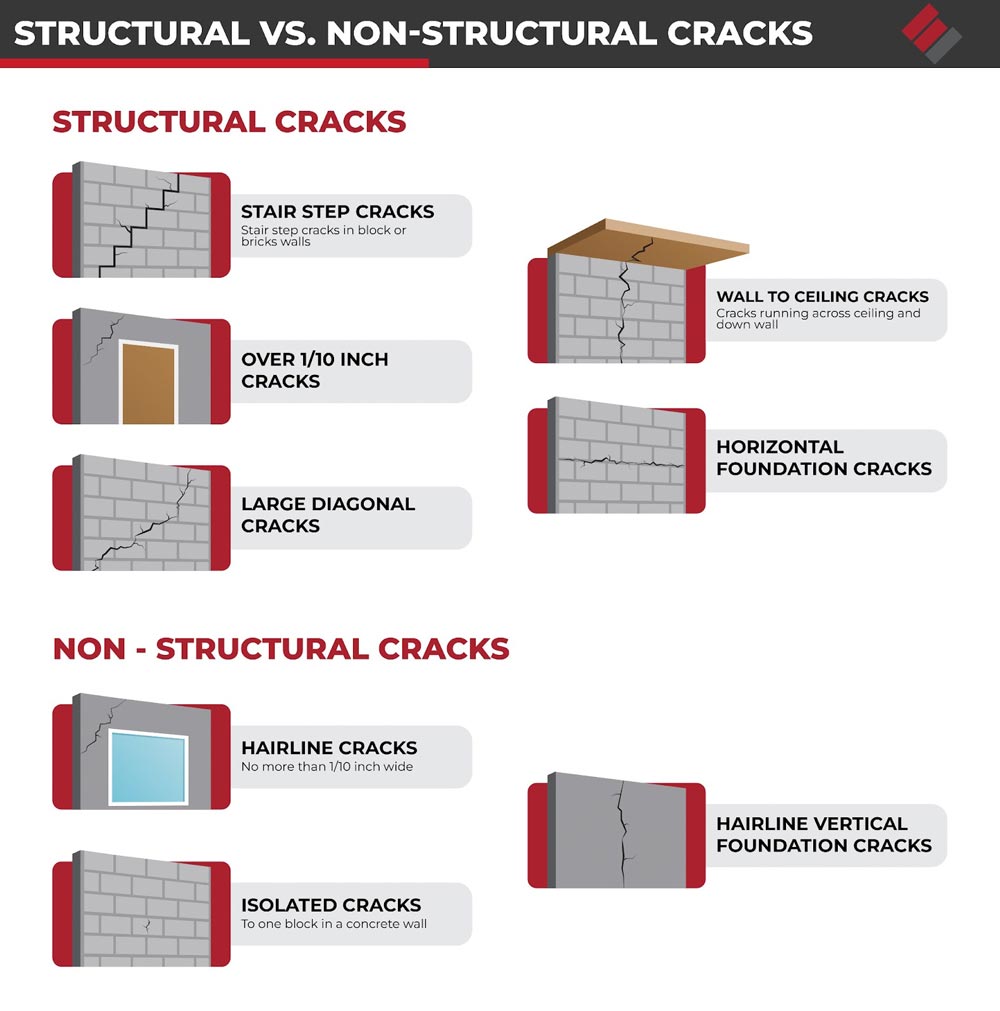
Warning Signs That Require Immediate Professional Attention
Certain crack characteristics indicate serious structural problems that need prompt evaluation and potential foundation repair.
Critical Crack Characteristics That Signal Danger
Watch for these warning signs that indicate potential structural issues:
- Large brick cracks wider than 1/8 inch: These typically indicate significant foundation movement or structural damage beyond normal settling.
- Small brick cracks that grow rapidly: Even initially minor cracks become concerning when they expand quickly over weeks or months.
- Horizontal brick cracks with wall bowing: This combination almost always indicates serious foundation problems requiring immediate attention.
- Multiple crack types appearing together: When you notice various wall crack patterns simultaneously, this suggests comprehensive structural issues.
Adams Chimney Specialist LLC provides exceptional masonry crack repair services in your area. Don’t delay—contact us now to schedule your expert masonry repair appointment. Click the “Book Masonry Repair Estimate Appointment” link to secure your spot online and discover why we’re the top choice in the industry!



You must be logged in to post a comment.